1st public school for african americans: Reconstruction Era History and African American School.
1st public school for african americans: Reconstruction Era History and the First Public High School
The phrase 1st public school for african americans does not point to one simple answer in every case. In the history of African American education, the answer depends on whether you mean a local African American school, the first public school system in a state or city, or the first public high school for Black students in the United States. The most widely cited national answer is Dunbar High School in Washington, D.C., founded in 1870 as the Preparatory High School for Colored Youth. For a short reference on that milestone, see First Public High School for African Americans Established. But the broader story begins much earlier, during the Reconstruction Era, when African Americans pushed for education, built schools, and created new possibilities for their children and communities.
The short answer about the 1st public school for african americans
If you are searching for the 1st public school for african americans, the first thing to know is that historians usually distinguish between a public school for Black children in a local community and the first public high school for African Americans in the United States.
Dunbar High School is widely recognized as the nation’s first public high school for African Americans. It became a model for African American education and helped shape the history of African American learning in the United States. At the same time, other black public schools and local schools for African Americans existed in different places across the South and in border states during and after 1865.
Why the answer depends on context
The phrase first public can mean different things.
A historian might ask:
- What was the first public school system to serve African Americans in a city?
- What was the first public high school for Black students?
- What was the first school for African Americans in a specific county or state?
- What was the first African American school built by a local community?
That is why people often search for a single answer and then discover that the real story is more complicated. During the Reconstruction Era, Black communities, school districts, and local leaders worked in different ways to build education systems that had previously been denied to them. Some schools were public and private schools run with help from churches, missionaries, or local boards. Others were founded by Black residents themselves.
Reconstruction Era education changed Black life
After slavery, formerly enslaved people understood that education was tied to freedom, citizenship, and economic survival. Across the schools in the South, African Americans pushed for literacy, basic schooling, and eventually secondary education.
The years after 1865 were a turning point. Many enslaved African Americans had been blocked from learning to read and write. Once emancipation came, they saw schooling as a path to dignity and power. In many places, black children and black students attended improvised classrooms before formal systems were created.
The Reconstruction Era also changed the relationship between Black communities and public schooling. In many areas, the first public schools for African Americans were not luxury projects. They were often simple school buildings, sometimes local one-room structures, that served as both a formal school space and a symbol of survival.
African American communities built schools when no one else would
The history of African American education is full of examples of local action. In some places, a black community organized teachers, found land, raised money, and worked with a board of education or missionary group to create a local school.
This is why the story of Black schooling is not just about one famous institution. It is also about schools across the south, schools and colleges, and the effort to improve the education of southern blacks at every level.
Some communities relied on:
- private schools
- church-based classrooms
- early system of public education efforts
- help from the American Missionary Association
- support from black teachers
- guidance from school officials
In many of these places, African American students and black teachers made the school work even when resources were scarce.
Dunbar High School and the first public high school for African Americans
The best-known national answer to the question of the 1st public school for african americans is Dunbar High School in Washington, D.C.
Founded in 1870, Dunbar began as the Preparatory High School for Colored Youth. Later known as M Street High School, it became one of the most important historically black institutions in the nation. It was the first public high school for African Americans and helped prove that Black students could excel in rigorous academic settings when given access to equal resources.
Dunbar became part of the long history of African American education and helped show why equal education mattered. It was not simply a black school in the narrow sense; it was a high-level academic institution that prepared generations of Black leaders. In that way, it also helped shape the broader civil rights movement.
Other early schools for Black students
The story does not end with Dunbar. Other early schools for Black students appeared in different regions and are often cited as important local firsts.
For example:
- Fort Scott, Kansas, had an early public school for African American children.
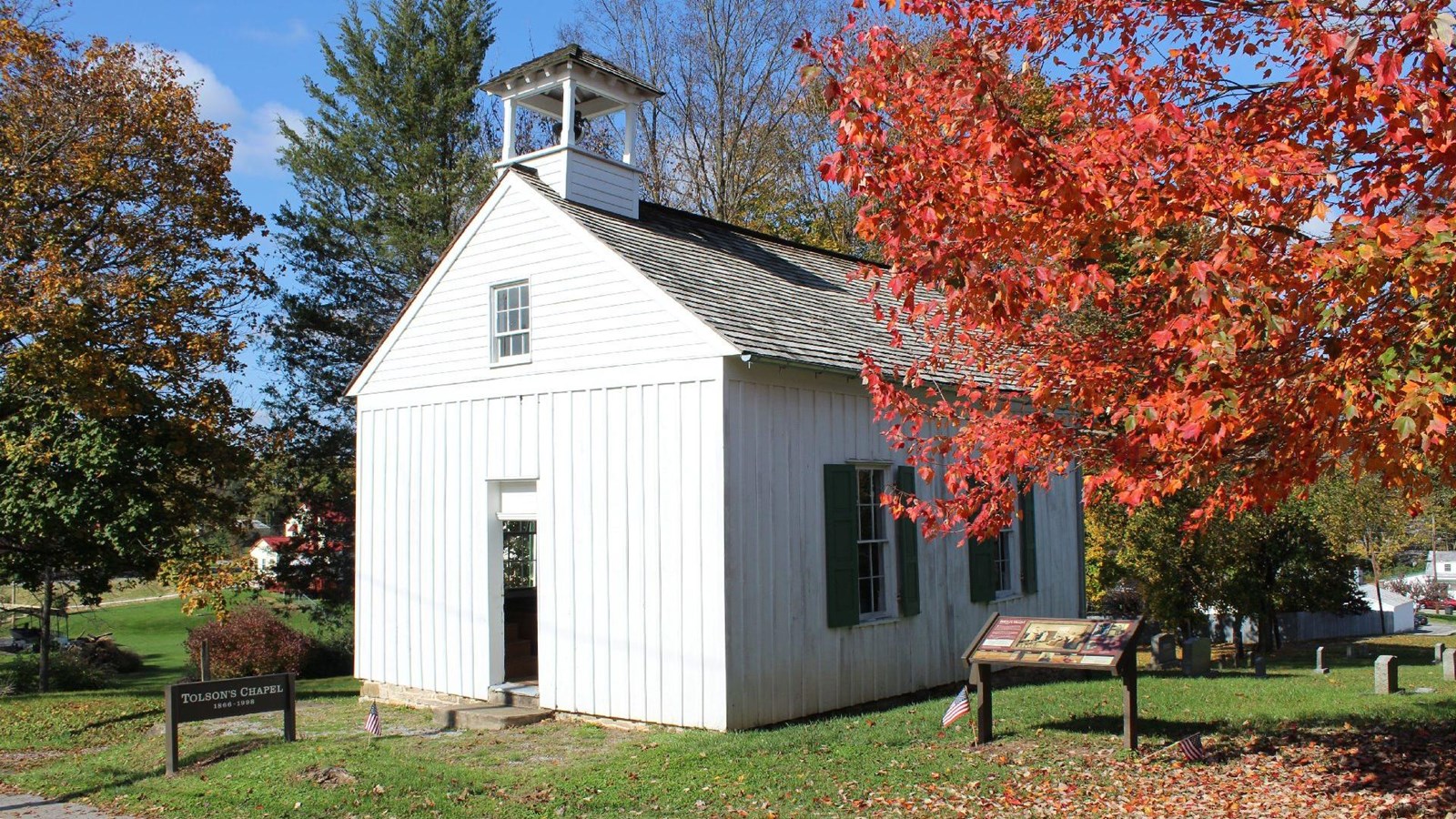
- Tolson’s Chapel in Maryland became a school site during the Reconstruction Era. Learn more at Tolson’s Chapel.
- Penn School in South Carolina helped educate freedpeople on St. Helena Island. See Penn Center.
- In many rural schools, Black families and local leaders built systems of learning from the ground up.
These places matter because they show how formal education reached African American communities in different ways. Some schools were part of the early public school system. Others were transitional spaces between private schools and public education. Some were supported by the American Missionary Association, while others depended more directly on Black local leadership.
The role of the American Missionary Association and black teachers
The American Missionary Association played an important role in helping establish schools after the war. It worked alongside Black communities, churches, and other groups to expand learning opportunities for African Americans.
That support mattered because there was often a shortage of teachers. In many places, black teachers became the backbone of the new schools. They taught primary school lessons, primary and secondary subjects, and the practical skills needed for daily life.
The presence of black teachers also mattered politically. It showed that African Americans were not just students in the system. They were builders of the system itself.
School districts, white schools, and unequal funding
Even after public schooling expanded, equality was far from guaranteed. Many school districts created separate systems for Black and white children. White schools often received more money, better buildings, and more support from local governments.
That inequality shaped the future of black public schools and public schools for black children. African American families fought for better access, better buildings, and better teachers. But many schools remained underfunded, especially in mostly in rural areas where access was limited.
The struggle for black education was not only about opening doors. It was also about making sure the doors led somewhere useful.
From public school system to historically black colleges and universities
The long path from the first school for African Americans to historically black colleges and universities shows how education expanded over time.
Early secondary schools for African Americans prepared students for more advanced study. Some graduates went on to black college institutions, teacher-training programs, or vocational programs. Others entered schools and colleges that served Black students at a higher level.
Over time, historically black colleges and universities became central to African American advancement. They helped create an educated leadership class and supported the broader African American community. They also gave structure to primary and secondary education goals that had started in local schoolhouses decades earlier.
Education, industrial training, and the turn of the 20th century
By the turn of the 20th century, Black education was still limited by segregation and race-based inequality. In many places, Black students were offered industrial education instead of full academic instruction. Schools were often expected to train children for labor rather than leadership.
That approach reflected the limits of the Jim Crow era and the low expectations placed on Black learners. Yet African Americans continued to fight for a more complete vision of learning. They wanted a formal school experience, not just training. They wanted pathways to teaching, law, medicine, business, and civic life.
That is why the history of the first black public schools matters so much. These schools were about more than classrooms. They were about possibility.
Why the 1860s and 1868 matter
The years 1865 and 1868 appear again and again in the history of Black schooling because they mark the shift from slavery to freedom and then to formal public systems.
In 1865, slavery ended nationally. In 1868, Reconstruction governments and local communities were still struggling to build a system of public education that included African Americans. These years were decisive because they shaped the future of education for African Americans and the later development of secondary schools, school curriculum, and school governance.
They also shaped the conditions under which Black families sought education for the first time in public settings.
Why this history still matters
The story of the 1st public school for african americans is not just a history lesson. It is part of the broader struggle for equality in the United States.
These schools influenced:
- the civil rights movement
- later debates about funding and segregation
- the rise of Black academic leadership
- the growth of Black institutions and public advocacy
They also show how the black community kept building even when the system was against them.
Conclusion
If you are asking about the 1st public school for african americans, the clearest national answer is Dunbar High School in Washington, D.C., the first public high school for African Americans. But the wider story is bigger than one school. It includes the Reconstruction Era, the work of African American communities, the efforts of black teachers, and the creation of schools across the South.
That history shows how African American education grew from hardship into a lasting foundation for Black progress. It also reminds us that the fight for fair education began long before modern civil rights battles — and that it was built school by school, teacher by teacher, and community by community.

Related links: Inspirational Quotes from African Americans and What Is a Foundational Black American?