What Created the Demand That Drove the Transatlantic Slave Trade?
What Created the Demand That Drove the Transatlantic Slave Trade?
The demand behind the transatlantic slave trade came from plantation profit, European consumer markets, and a system built to exploit enslaved labor at scale. Sugar led the way. Tobacco, coffee, and cotton kept it moving.
In this article
- How plantation economies created the demand for labor
- Why sugar became such a powerful engine
- How the Middle Passage connected Africa and the Americas
- Why abolition took resistance, pressure, and time
The demand that drove the transatlantic slave trade came out of greed, empire, and plantation profit. In the history of slavery, that is the part people keep trying to soften. But there is no soft version of it. European colonies in the Americas wanted cheap labor. Not just a little labor. A massive, controllable labor force that could be forced to work in brutal conditions and keep the money flowing back across the Atlantic. If you want more Black history and culture coverage from The Black Affect, this article sits in the center of that larger story.
That demand did not appear by accident. It grew inside the institution of slavery, inside colonial expansion, and inside a world economy that treated Black life as disposable. Sugar, tobacco, coffee, and cotton were the engine. Enslaved people were the fuel.
The trans-atlantic slave trade was tied to world history in a direct way. It helped shape global markets, colonial wealth, and the long afterlife of racial violence that still hangs over the Americas today.
Plantation economies and the atlantic slave trade
The atlantic slave trade grew because plantation owners needed a steady demand for labor to keep their farms profitable. These were not small farms. They were plantation systems built to export cash crops to Europe. Every acre cleared, every cane stalk cut, every tobacco leaf packed, every bale of cotton shipped meant more profit for someone far away.
That is where the trade of enslaved people became central.
The plantation system depended on slave labour that could be extracted without wages, rights, or rest. In the Atlantic world, plantations were not just farms. They were labor machines. The more the trade increased, the more enslaved Africans were forced into that machine.
Sugar plantations and cash crops
Sugar was one of the biggest forces behind the rise of the transatlantic slave trade involved in the growth of colonial wealth. Europeans developed a deep appetite for sugar, and plantations in the Caribbean and Brazil responded by scaling production hard.
Sugar was profitable because the labor was stolen.
The same pattern spread through tobacco, coffee, and cotton. These crops were part of the wider trade in enslaved people, and they helped create the demand for African labor across the Atlantic ocean. If you want to understand the rise of the trans-atlantic slave trade, you have to start with the plantation and the market. The crop made money. The labor was treated as free.
That is why the slave trade represents more than a transport system. It was the business model behind the violence.
SlaveVoyages tracks the transatlantic slave trade database, and the UNESCO Slave Route Project gives broader historical context.
Why enslaved people were forced into the system
European colonists did not look at free labor and decide it was too expensive. They looked at Black bodies and decided they could be used, bought, sold, and controlled.
That is the ugly truth.
Enslaved people were pulled into a system that turned human beings into property. The demand was not just for workers. It was for people who could be sold into slavery and worked to death if needed. This happened because the institution of slavery made that kind of cruelty legal, profitable, and normal for the people running it.
The trade in enslaved Africans was not about labor shortage alone. It was about power.
The Middle Passage and the trade of enslaved people
The Middle Passage was the most brutal part of the trade in enslaved people. It was the forced crossing from Africa to the Americas, and it carried Africans across the Atlantic in overcrowded ships built for profit, not survival.
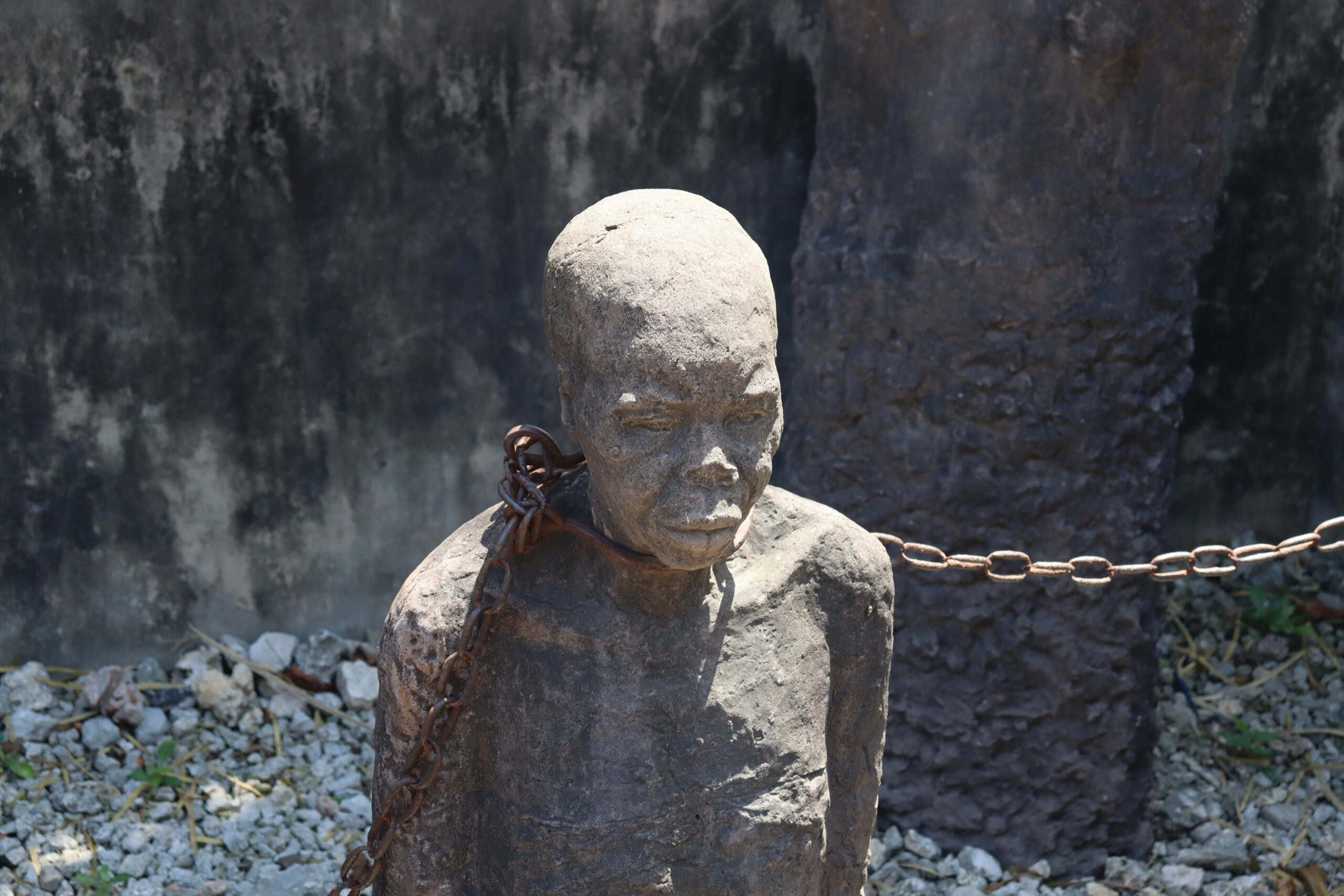
The Middle Passage is one of the clearest examples of how the Atlantic slave trade worked. People were chained below deck. They were starved, beaten, raped, and forced to endure disease and suffocation. Many did not survive.
What the Middle Passage was
The Middle Passage was not just travel. It was a weapon.
It connected the coast of West Africa to the Caribbean, North America, South America, and every plantation economy that depended on stolen labor. The slave trade took place on ships, in ports, in forts, and in markets, but the Middle Passage is where the system’s violence became impossible to ignore.
When people talk about the African slavery in the Americas, they often skip the ship. That is a mistake. The ship is the story.
How the Atlantic crossing worked
Enslaved Africans across the Atlantic were packed into slave ships and carried into a world they did not choose. Those ships were part of the trade from Africa into the Americas and back again with sugar, rum, tobacco, cotton, and other goods.
This was the Atlantic slave trade in motion.
European slave traders built the route. African captives were sold at the slave coast, shipped across the Atlantic, and forced into plantation labor once they arrived. The trade of enslaved people was a commercial system from start to finish.
The British Library’s Atlantic slavery collection and the National Museum of African American History and Culture are both helpful for deeper reading.
Triangular trade and the wider Atlantic world
The triangular trade tied together Europe, Africa, and the Americas.
European goods moved to Africa. Enslaved people from Africa were carried to the Americas. Plantation products moved back to Europe. That was the structure. Simple to describe. Horrific to live through.
How Europe, Africa, and the Americas were connected
The Atlantic world was built through exchange, but it was not an equal exchange. Europe and Africa were connected through violence, war, and bargaining under pressure. The Americas were where enslaved labor was extracted at scale.
The trade involved merchants, banks, ship captains, investors, and colonial governments. Many North European slave traders entered the business after Portugal and Spain had already laid down parts of the route. British slave traders later became major players in the british slave trade, especially as the trade expanded in the Caribbean and North America.
This is also where the history of the Atlantic slave trade becomes a world history story. It was not just one coast or one empire. It was a network.
The west coast of Africa, especially the slave coast, became a major site in the trade in enslaved Africans. Captives were taken from inland regions, moved to the coast of west Africa, and held before sale to slave traders. Some had already been sold into slavery through local conflict, raids, or political capture. Others were seized directly by armed forces tied to the trade.
Involved in the slave trade
Many people participated in the slave trade, and that is part of why it lasted so long.
African leaders, merchants, and intermediaries sometimes participated in the slave trade, often under pressure from war, shifting power, and the incentives created by European demand. European slave traders and plantation owners were the main drivers of the system, but the trade also involved local and regional actors who were pulled into it.
That does not erase responsibility. It shows how deep the system ran.
The role in the slave trade varied, but the outcome was the same: human beings were turned into commodity flow.
Slavery existed in Africa too
It matters to say this carefully. Slavery existed in Africa before the Atlantic slave trade, but it was not the same as the racial, hereditary, chattel system built in the Americas.
That difference matters in world history.
The Atlantic system hardened slavery into a racial caste structure. It changed the scale, the brutality, and the permanence of the institution of slavery. That is one reason the effects of the slave trade still shape Black life today.
Ending of the slave trade and suppression of the slave trade
The ending of the slave trade came slowly, and it came because enslaved people fought back, abolitionists organized, and governments were pushed into action.
The suppression of the slave trade did not happen just because lawmakers suddenly grew a conscience. It happened because the system was under pressure from rebellion, resistance, and moral challenge.
Abolition campaigns and resistance
The abolition of the slave trade was not just a policy decision. It was a struggle.
Slave uprisings frightened plantation owners and made the system harder to control. Enslaved people resisted in every way they could. They ran. They fought back. They sabotaged. They survived. Their resistance made the trade more expensive and more unstable.
At the same time, abolitionists exposed the violence of slavery and slave trading in public debate. They helped push the British slave trade toward the slave trade in 1807, when Britain passed its ban on the trade.
For more context, see the Library of Congress and the Britannica overview of the transatlantic slave trade.
Why suppression did not end exploitation immediately
Even after governments tried to abolish the slave trade, the institution of slavery remained in place in many places. That is one of the most painful lessons in the history of slavery. Laws changed faster than lives did.
Smuggling continued. Domestic slave trade systems expanded. Forced labor kept going under new names. The suppression of the slave trade did not erase the deeper structure of racial capitalism that had already been built.
So yes, the ending the slave trade mattered. But it did not end the harm.
The long afterlife of slave trade and slavery
The effects of the slave trade lived on in land ownership, wealth gaps, racial hierarchy, and the memory carried by descendants. African slavery in the Americas was not a side note. It shaped the modern world.
The trade in enslaved africans helped build ports, banks, and empires. It also built trauma, resistance, and Black survival. That is why the slave trade also belongs in the story of freedom struggles. The same people who were trapped inside it also helped break it open.
The rise of the trans-atlantic slave trade and the years of the transatlantic slave trade left behind a legacy that did not end with abolition. It still shows up in who got paid, who got dispossessed, and who had to fight for basic human dignity.
Conclusion
The demand that drove the transatlantic slave trade came from plantation profit, European consumer markets, and a system built to exploit enslaved labor at scale. Sugar led the way. Tobacco, coffee, and cotton kept it moving. European slave traders, plantation owners, banks, and empires all played a role in the slave trade.
The trade involved millions of people from Africa being forced across the Atlantic. It shaped Africa and the Americas, and it changed world history forever.
The transatlantic slavery system was driven by the demand for labor, especially on plantations producing cash crops for European markets.
And if you want the honest version, it was driven by profit, violence, and a willingness to treat Black people as disposable.
If you want more Black history and culture pieces, you can browse the The Black Affect blog or read What Is a Foundational Black American?.